
Building Artificial Surf Reefs: Worldwide Lessons & Applications

Updated: Feb 5, 2025
The rising global interest in surfing and artificial surf reefs reflects a desire to merge coastal protection with recreational value, yet the complexity and mixed success make them a challenging innovation to implement effectively. At International Coastal Management (ICM), we’ve been involved with artificial surf reef developments for the last 40 years, refining the art of balancing coastal protection with surfing functionality. As coastal communities face increasing challenges from erosion, sea-level rise, and the need for tourism-driven economic growth, the lessons learned from global artificial surfing reef projects can serve as a roadmap for future projects.

What are Artificial Surf Reefs?
Artificial surf reefs are man-made underwater structures engineered to replicate the benefits of natural reefs. These structures, designed by specialised coastal engienering companies, aim to enhance wave quality by shaping surfable waves, improving wave face cleanliness, and extending ride length. While they are often thought to offer coastal protection by reducing wave energy and minimising beach erosion, in practice, surf reefs rarely achieve both objectives effectively.
"Artificial reefs can improve surf conditions, but expectations must be managed. Surfable waves depend on highly variable factors like wave height, period, and wind direction. Designing the ‘perfect wave’ for everyone is not realistic." - Angus Jackson, Founder, International Coastal Management
Constructed with materials like geotextile sand containers, rocks, or concrete modules on the ocean floor, artificial surf reefs are typically optimised for either surfing performance or coastal protection, but achieving both simultaneously requires careful trade-offs and compromises.

Narrowneck Artificial Reef 
Surf at Narrowneck Artificial Reef
Artificial Surf Reef Design Challenges and Variables
Designing an artificial surf reef requires precision and consideration of many variables. The type of breaker, peel angle, and wave height are all critical to achieving a rideable wave. A reef that produces consistent, progressive waves for surfers must account for local seabed contours, wave energy, and target users.
Wave Height and Period: Determines the energy and surfability of the wave
Breaker Type: Spilling waves suit beginners; plunging waves appeal to advanced surfers
Peel Angle: Influences how progressively the wave breaks along its crest, critical for rideable conditions
For example, a 1-meter wave will break in water approximately 1 to 1.4 meters deep. The reef’s shape must encourage waves to break progressively along the crest, creating the "peeling" effect desired by surfers.
The perfect reef for one group of surfers may not suit another. Beginners benefit from safer, spilling waves, while advanced surfers usually prefer the challenge of steep, plunging breaks.


Designing for Surfing vs. Coastal Protection
The experience on the Gold Coast highlights a key reality: designing a surf reef is much more complex than it seems. While natural reefs around the world can (in the right conditions) create ideal surfing conditions, replicating this in an engineered structure is not as simple as it sounds.

The challenge lies in achieving the precise conditions needed to produce a progressive, rideable wave that offers a long, consistent surfing experience.
A surf reef requires careful attention to the placement and geometry of the reef’s crest, which must be carefully angled toward the beach to ensure waves break in a way that’s optimal for surfing. In contrast, coastal protection reefs can be more straightforward, often taking the form of submerged breakwaters designed to reduce wave energy and prevent beach erosion.
The Gold Coast Artificial Reefs: An Initial Hybrid Approach
The Gold Coast provides two distinct case studies for artificial reefs. The Narrowneck Artificial Reef, a hybrid design, was created primarily for coastal protection with surfing as a secondary benefit. In contrast, Palm Beach Artificial Reef was designed as a surf reef, focused on generating a right-hand surf break.
Narrowneck Artificial Reef: A Multipurpose Artificial Reef
Designed as a multipurpose structure, The Narrowneck Artificial Reef, developed by ICM, was built primarily for coastal protection with a secondary objective to enhance surf conditions. Originally designed in a V-shape to allow for both left- and right-hand rides, this early prototype required adjustments when strong currents were observed in the model, leading to a split in the ‘V’. Due to safety considerations, a proactive decision was made to lower the reef's crest by 1 meter before construction, ensuring a depth of 1.5 meters below the low tide waterline.
While Narrowneck ultimately succeeded in its primary role as a coastal stabilisation reef, its surf functionality is limited to specific conditions. It should be noted that the Narrowneck Reef was part of an integrated coastal management approach for The Gold Coast’s northern beaches (The Northern Gold Coast Beach Protecting Strategy). The beach at the Narrowneck location should not exist due the large, artificial headland jutting out into the sea compared to the rest of the shoreline. The reef’s focus was to produce a coastal protection structure at low-cost and high-volume, therefore an innovative approach using large, sand filled geotextile containers was developed, producing a significant reef volume (approx. 70,000m³) for AUD$2.3M (approx. AUD$30/m³).


Angus Jackson, our founder, reflects on the surfing element of the reef, saying:
"Narrowneck works very well for coastal protection without causing harmful erosion behind the reef. However, as a surf reef, it’s more restricted, performing best when the tide is low and the swell is clean and large."
It should be noted that as an underwater structure that helps to retain sand in the nearshore zone, the reef creates greater percentage of use for surf amenity in its vicinity (bulging sand banks around the reef). The excess sand evident in the nearshore zone is typically where surfers can be found.
So, can you surf on the reef itself? Sure, if the conditions are right (low tide, 1.5m+ swell and offshore wind) as per the video below.
Palm Beach Artificial Surf Reef: Designed for Surfing
In contrast to Narrowneck, the Palm Beach Reef was designed to create a high-quality surf break (noting that surfing as a sport has changed dramatically since Narrowneck’s inception in the late 1990’s with significantly higher demand and general performance levels). A significant focus was put on highly complex computer models to achieve the ideal surf outcomes. Built using rock, Palm Beach Reef was significantly more expensive (AUD$18.3M total or approx. AUD$700/m ³) than Narrowneck and focused on producing a higher performance, right-hand surf wave.
This surf reef design offers important lessons for those seeking to create artificial surf reefs in other parts of the world. As Angus Jackson explains:
"Palm Beach shows that when the objective is surfing, the design can be more focused and effective. But with that comes higher costs, as the materials and precision required for a successful surf reef are significantly greater than those for a coastal protection reef."
An artificial reef feasibility study was conducted by ICM and Griffith University in 2004 (presented at the International Surf Reef Conference at Manhattan Beach, California 2005) showcasing that (based on the initial success of Narrowneck Reef as a prototype for artificial reefs) another artificial reef in Palm Beach would be a feasible addition to a beach protection strategy.
From there the reef design went through several reports and design stages (by BMT WBM in 2013, DHI in 2017 and a Final Report in 2018 by Royal Huskoning).
The Palm Beach Reef demonstrates that surf reefs can achieve their recreational goals, with good waves breaking on the reef in the right conditions (low tide, 1.5m+ swell and offshore wind) and have positive impacts on local sand bars with surf amenity in the lee the reef in smaller/average swell.

The Palm Beach Reef was located in the lee of a large, natural reef. This can help focus wave energy on the artificial reef. There is also has rock groyne structure inshore of the reef which helps to stabilises the top of the beach.
Can you surf on the reef itself? Yes, in the right conditions the reef breaks well.
Environmental and Economic Benefits of Artificial Reefs
Both reefs on the Gold Coast offer environmental and economic benefits. Artificial reefs, like their natural counterparts, provide habitats for marine life and contribute to improving beach nourishment practices. Additionally, the surf amenities provided by these reefs have attracted tourism, which has been a boom to the local economy.
"Both Narrowneck and Palm Beach have enhanced the local surf scene and brought significant environmental benefits. The sandbars formed around Narrowneck, for example, have contributed to the stability of the shoreline while also offering recreational value." - Angus Jackson
For other coastal communities, this dual role of artificial reefs, both as coastal protectors and economic drivers through tourism, can be a powerful incentive to explore similar projects.
Global Artificial Surf Reefs
Artificial reefs have been developed worldwide with varying degrees of success, showcasing the complexities and challenges of combining coastal erosion protection with surfing enhancement. Below is an overview of notable projects, highlighting their objectives, construction methods, and outcomes:
Bukitts Reef, Bargara, Queensland (1997)
Objective: Surf-only improvement.
Materials: Basalt boulders.
Construction Method: Existing rocks on the headland were repositioned using an excavator at low tide. Approximate volume: 300m³.
Outcome: A cost-effective and community-driven effort that transformed hazardous conditions into a peeling right-hand wave, Angus Jackson of ICM was able to provide valuable input into this pioneering concept.
Cables Reef (Cable Station), Western Australia (1998-1999)
Objective: Surf-only enhancement.
Materials: Limestone rock.
Construction Method: Rocks placed from a barge. Approximate volume: 5,000m³.
Outcome: Although it created high-quality waves, inconsistent swell conditions limited the Perth artificial surfing reefs effectiveness, with surfable days occurring sporadically.
Narrowneck Reef, Gold Coast, Queensland (1999-2000 with a top up in 2017)
Objective: Coastal protection with a secondary goal to improve surf quality.
Materials: Geotextile sand-filled containers (Terrafix non-woven SFGC).
Construction Method: 150-450t mega sandbags placed via hopper dredge. Approximate volume: 70,000m³.
Outcome: Narrowneck Reef, designed by ICM, successfully retained sand in the localised area, creating a consistent beach where there had not been before. It created marine biodiversity and surf quality was enhanced but remains limited to specific swell and tide conditions.
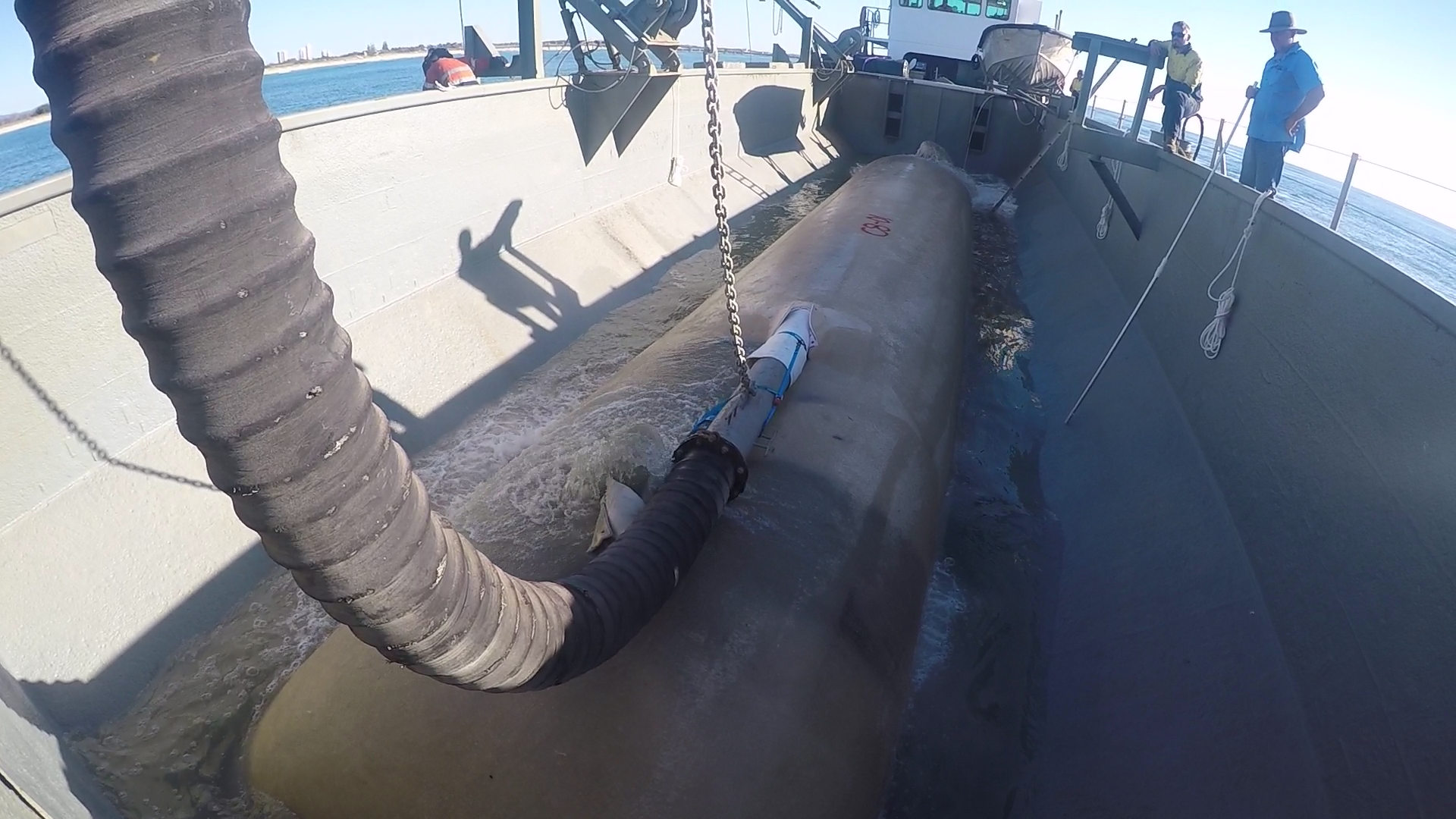
Filling mega sand-filled geotextile containers for the Narrowneck Artificial Reef 
Wave at Narrowneck Artificial Reef 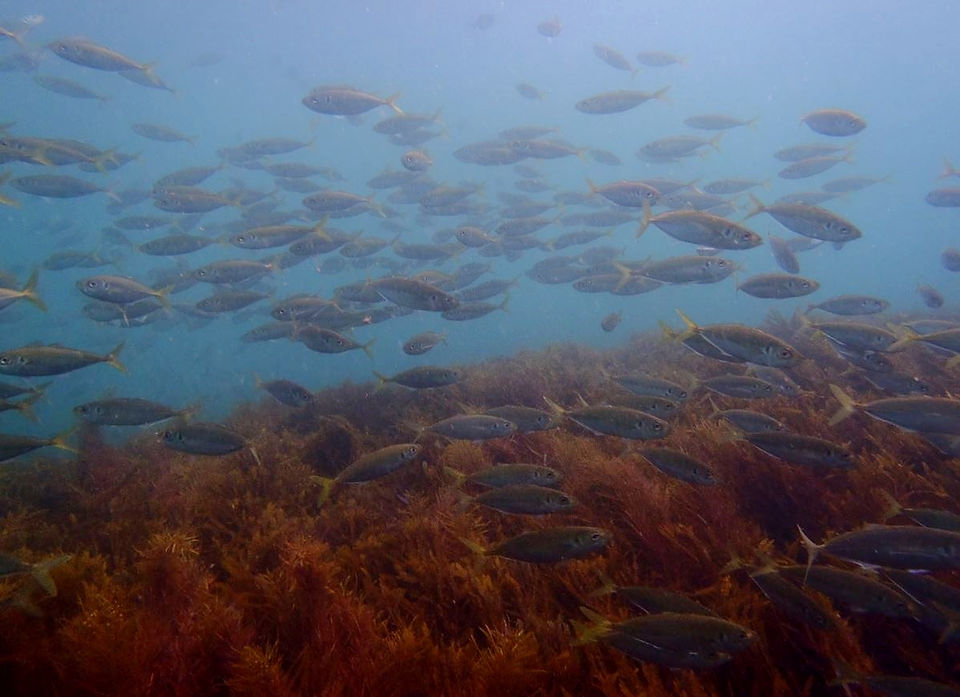
Marine life on Narrowneck Artificial Reef 
A wave at the Narrowneck Multifunctional Artificial Reef
Pratte’s Reef, California (2000-2001)
Objective: Surf enhancement to mitigate the negative impacts of a jetty on local surf conditions.
Materials: Geotextile sand-filled containers (Nicolon woven).
Construction Method: 14t geotextile containers placed by crane on a barge. Approximate volume: 1,350m³.
Outcome: The reef failed to consistently produce quality waves and was dismantled in 2010 due to structural issues and environmental concerns
Mount Maunganui Reef, Tauranga, New Zealand (2008)
Objective: Improve surfing conditions while enhancing beach width and biodiversity.
Materials: Sand-filled geotextile containers (terrafix/elco non-woven)
Construction Method: Containers filled in situ, deployed to create a delta-wing-shaped reef. Approximate volume: 6,000m³.
Outcome: Produced breaking waves when ideal conditions aligned, but there were construction complications, resulting in hazardous rip currents and eventual removal in 2014.
Boscombe Surf Reef, Dorset, England (2009)
Objective: Enhance surfing conditions
Materials: Geotextile sand-filled containers.
Construction Method: Containers filled with local sand. Approximate volume: 13,000m³.
Outcome: Initially produced occasional bodyboarding waves but faced structural failures. It was rebranded as a "multi-purpose reef" in 2017 but didn’t meet its original surfing objectives.
Kovalam Reef, Kerala, India (2010)
Objective: Coastal protection with secondary surf enhancement.
Materials: Geotextile sandbags (30m long).
Construction Method: Bags placed to create a 100m surfable left-hand wave. Approximate volume: 4,800m³.
Outcome: Initially stabilised the beach and improved surf, but structural failure within weeks led to its rapid deterioration.
Palm Beach, Australia (2018)
Objective: Surfing and coastal protection
Materials: Quarried rock approx 25,000m ³
Construction Method: Barge placed quarried rock
Outcome: Great surf in ideal conditions with surf amenity in the reef vicinity on sand bars for majority of the time
Banbury's Beach, Australia (2018)
Objective: Surfing
Materials: Floating air pocket
Construction Method: Barge placed rubber
Outcome: Damaged during installation, not able to function
While these reefs showcase the potential of artificial surf reefs, they also highlight the importance of site-specific design and clear project goals.
Upcoming Artificial Reef Projects
Albany Reef, Australia (TBD)
Objective: Surfing
Materials: Quarried rock
Construction Method: Barge.
Outcome: In process. This reef has also been 30 years in the making with initial feasibility study and designs by ICM and Griffith University for the locally lead Surf Group S.O.S and City of Albany. The project was then kicked off again in 2015 and has moved through further design development stages by various other consultants, it’s an exciting one to watch as a purely, surf focused reef.
Oceanside, California (TBD)
Objective: Coastal protection with secondary surf enhancement.
Materials: Quarried rock
Construction Method: Barge.
Outcome: In process. This reef is part of a coastal revitalising project with the main purpose to retain a sandy beach. ICM is working on the detailed design with GHD.
Other Artificial Surf Reefs
ICM has developed surf reef designs for locations such as Dubai and Colombia, with these innovative projects awaiting future construction. Modern surf parks/wave pools have also been built globally, specially designed for making waves perfect for surfing at different levels.
Key Considerations for Successful Artificial Surf Reefs
The success of an artificial surf reef depends on aligning its design with local conditions, user needs, and environmental considerations. As Angus Jackson explains: "The final design of any reef is as much social science as physical science. It must suit the culture, economy, and surf community it serves."
The global artificial surf reef projects highlight key takeaways for future reefs:
Define Objectives Clearly: Is the reef for surfing, coastal protection, or both?
Wave Climate: Evaluate local wave conditions for consistency and quality
User Safety: Safety cannot be compromised for public users
Materials and Design: Cost and constructability are heavily influenced by material choices
Leverage Natural Sediment Processes: Sandbars around reefs can amplify surf conditions.
Community Engagement: Align with local needs and priorities to ensure acceptance and long-term support.
Account for Maintenance: Ongoing monitoring and maintenance to ensure long-term success.
FAQ: Understanding Artificial Surf Reefs
Do artificial reefs actually work? Artificial reefs are complex structures that require a balance of science, engineering, and site-specific knowledge to succeed. When done right, they not only protect coastlines but also enhance marine habitats and recreational value. The success of reefs like Narrowneck proves the potential when these factors align.
What is the most famous artificial reef? The Narrowneck Artificial Reef on the Gold Coast, Australia, is widely regarded as one of the most renowned. It successfully integrates coastal protection with environmental enhancement and improved surfing during ideal conditions, showcasing the multifaceted benefits of artificial surf reefs.
What are the advantages and disadvantages of artificial reefs? Artificial reefs are a long-term investment. Their benefits, like coastal protection, biodiversity enhancement, and recreation, are significant, but they require ongoing management to deliver sustainable results.
Get in Touch
Whether your goal is coastal erosion protection, surfing enhancement, or both, ICM has the expertise to guide your project. With decades of experience designing innovative, sustainable solutions, we’re ready to help you transform your coastline.
Contact us today to learn more.


