
Weinam Creek Ferry Terminal Dredging & Maintenance

Updated: Apr 28
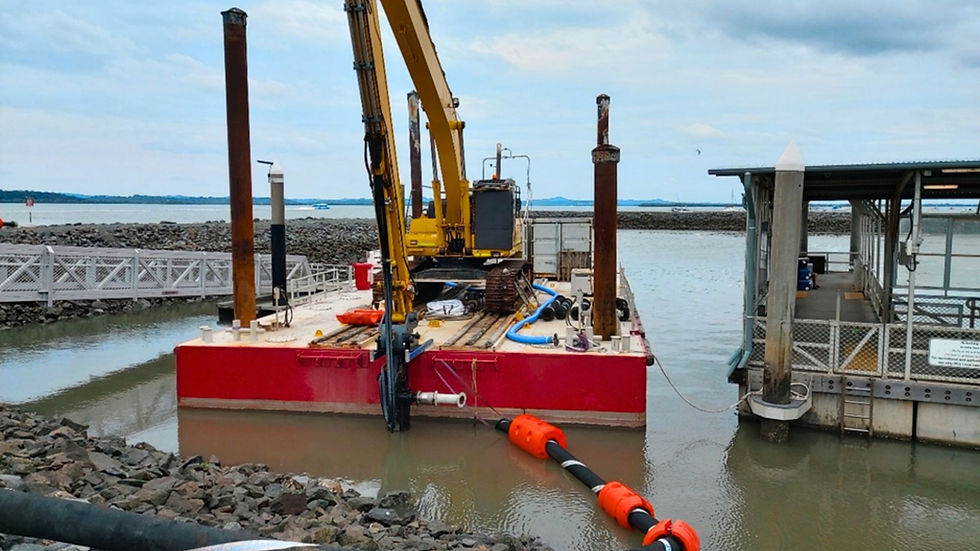
ICM developed and supervised a tailored dredging and maintenance approach for the Weinam Creek Ferry Terminal marina basin, where fine sediment build-up was affecting ferry operations and creating low-tide safety and structural risks. The works combined precision excavation and diver-assisted dredging to remove sediment from beneath ferry infrastructure while maintaining continuous terminal operations.
Project Details
Client: Redland City Council
Date: 2025
Location: Weinam Creek Ferry Terminal, Queensland, Australia
Delivery Partners: McQuade Marine Services, MCC Civil Commercial Diving
About This Project
The Challenge
Fine sediments carried into the Weinam Creek marina basin, together with propeller wash around the public ferry pontoons, had caused persistent accumulation beneath and around the terminal structures. This reduced operational efficiency and created safety and structural risks at low tide. Conventional dredging methods were not well suited to the site because of the confined working area, the size of the floating structures, and the need to keep ferry services operating throughout the works.
The Solution
ICM developed and supervised a hybrid dredging methodology tailored to the site constraints. The approach combined precision excavation using a barge-mounted long-reach excavator with diver-assisted suction dredging to access sediment beneath wide pontoons and fingers. Sediment was transferred via a 150 mm line to the TSHD Port Frederickfor transport to the approved disposal site at Mud Island. ICM coordinated barge, excavator, and dive teams, monitored progress and quantities, and scheduled operations around ferry timetables to minimise disruption to terminal users.
The works successfully removed sediment from beneath a large and operational ferry structure where traditional dredging methods would have been difficult to implement. Ferry services continued without interruption, no adverse impacts to pontoons were recorded, and the project established a practical methodology, staging sequence, and volume planning basis for future maintenance dredging at the terminal.
“The key was developing a dredging approach precise enough to work around active ferry infrastructure while keeping services running safely and efficiently.”
Services Provided
Dredging methodology development and supervision
Hydrographic inputs, volume estimation, and operational monitoring
Contractor coordination for barge, excavator, and dive teams
Scheduling around ferry operations and stakeholder liaison
QA of works and reporting to inform future maintenance planning


